If a book like the biblical Isaiah can rightly be considered inexhaustible, the claim pivots in part upon the sheer poetic nuance of its language.
The book’s third chapter fiercely denounces a leaderless people. Those who have not abdicated entirely the burden of leadership govern like children. Indeed the line after line of severe dissection of Judah’s body politic is almost too much to bear in the wake of a cartoonish electoral season when childishness became a political virtue.
Yet in contrast the prophet himself sustains a very adult command of his language.
Two conventional verbs come into play in the twelfth verse. I have italicized and underlined them, and italicized the words immediately surrounding.
My people—infants are their oppressors, and women rule over them. O my people, your guides mislead you and they have swallowed up the course of your paths. (Isaiah 3:12 ESV)
English translators, when they note the lyrical play, are forced by their target language to drop it from their hands. But a brief foray into the Hebrew text is a tool for recovery.
The verb here rendered guides is given the form of a noun. It is the Hebrew אשר, a word that certainly does mean guide. But that meaning is only derivative. The action at its heart is a making straight, a keeping true, a straightening out. This is what guides are meant to do. They conduct those they lead along a course that leads them to a destination they’d be hard pressed to find on their own, efficiently and without detour. In the essence of things, they are path-straighteners. Isaiah notes their presence here, among a surrounding thicket of hapless leaders.
Yet these ‘guides’ do precisely that which one hires a guide in order to avoid. They make Judah wander. They put the people on a wrong course. They lead them astray.
Hebrew תעה is a conventional and therefore familiar word for this kind of action. You might expect it of a trickster, of a bandit well prepared in ambush, even of one’s wily enemy. But never of a guide.
Never of a path-straightener.
Isaiah returns to this very theme in the book’s ninth chapter.
… for those who guide this people have been leading them astray, and those who are guided by them are swallowed up. (Isaiah 9:16 ESV)
It is in these quiet juxtapositions of two conventional words that Isaiah’s rhetoric achieves its incomparable and enduring force. Presumably, it is here too that a remnant in Judah heard a persuasive voice and took measures to repent, to return, to come back onto a track that promised future instead of ashes. It is here in the small turn of a phrase, in the knowing juxtaposition of two common words to express an uncommon truth, that the book manifests some of the beauty that explains its survival, indeed its inexhaustible appeal.
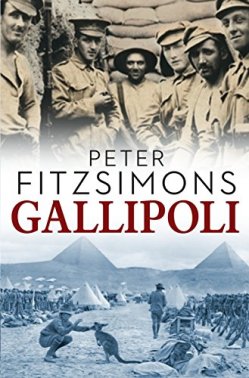 FitzSimons puts a lot of himself in this story, not always a promising approach for a history writer. Yet this manages to illuminate rather than obscure the Gallipoli narrative. The author’s full-disclosure explanation of how his own understanding of the battle has changed gives the non-Australian reader a glimpse into the various ways in which that antiopodean nation itself has moved through various stages of engagement with one of its defining moments.
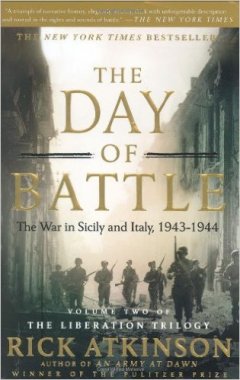 In The Day of Battle, as elsewhere, Atkinson’s writing is not only fueled by the very best research. It also goes down smoothly as such a tale can.
 My own battle with fundraising has seen some success and some notable failure. I was raised to believe that a decent person never asked anyone for money. Nouwen’s little book turns that idea upside down.
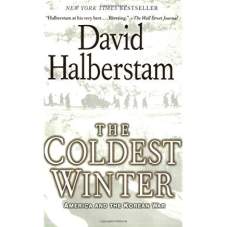 In his introduction to The Coldest Winter, the author alludes to the ‘colossal gaffe’ of Secretary of State Dean Acheson’s omission of South Korea when drawing America’s Asian defense perimeter. Sadly, the Korean Conflict was to offer a strong roster of competitors for ‘greatest colossal gaffe’ status. Per Halberstam’s statistics, the chaotic war without the title would claim 33,000 American lives alongside of 415,000 South Koreans and perhaps a million and a half Chinese and North Koreans.
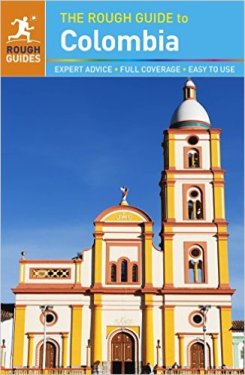 The Rough Guide to Colombia is no exception. It may well be the best of its kind for Colombia. Why do I say this?
 It is the practitioners of education-as-preparation-for-test-taking who absorb the blows of the author’s satire. The Yale University Admissions Department and the Educational Testing Service stand in for the broader industry.


